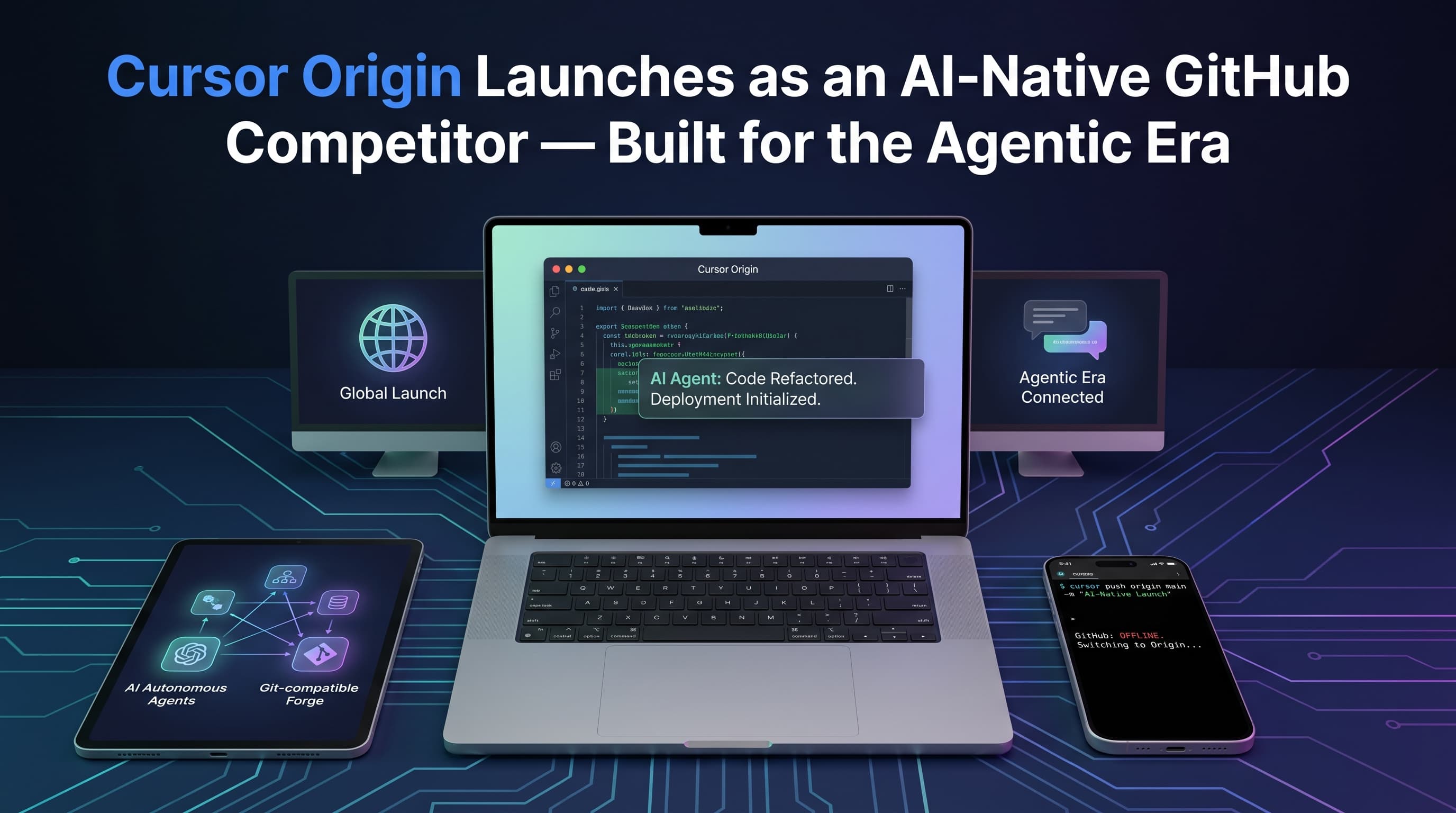
On August 17, 2026, Cursor didn't just ship a feature — it fired a direct shot at GitHub. The company launched Origin, an AI-native code hosting platform and Git-compatible forge built directly into the Cursor editor, positioning itself as the first serious infrastructure challenger to Microsoft's developer hub in years. The timing, as it turned out, couldn't have been more dramatic.
A GitHub Outage Opens the Door
The same day Origin went live, GitHub suffered a major service outage that disrupted engineering workflows for nearly seven hours. For developers already curious about alternatives, the timing was impossible to ignore. As The New Stack put it: "If GitHub was stable, these alternatives would not be as interesting."
Cursor seized the moment. Origin's launch gave frustrated developers an immediate, tangible alternative to evaluate — one that promised not just parity with GitHub, but a fundamentally different philosophy around how code gets written, reviewed, and shipped.
What Is Cursor Origin?
Origin is described by Cursor as a "git forge for the agentic era." Unlike GitHub, which was designed around human developers committing code manually, Origin is architected from the ground up to support autonomous AI agents operating independently inside a codebase.
Built for AI Agents, Not Just Humans
Cursor's Cloud Agents can use Origin to independently clone repositories, create branches, commit changes, and open pull requests — without a human touching the keyboard. This isn't a bolt-on automation feature; it's the core design premise of the platform.
For teams already leaning into agentic workflows, this is a meaningful architectural shift. Traditional Git forges treat AI as a tool that assists humans. Origin treats AI as a first-class collaborator with its own access patterns and workflows.
GitHub Sync and Third-Party Integrations
Cursor isn't asking developers to abandon their existing infrastructure cold turkey. Origin features real-time, two-way synchronization with GitHub, allowing teams to mirror existing repositories and keep comments, reviews, and pull requests in sync across both platforms. SiliconANGLE confirmed this bidirectional sync as a core part of the launch.
The platform also ships with integrations for the broader developer toolchain out of the box:
Vercel: Automatic preview deployments triggered directly from Origin pull requests.
Depot: Fast, remote CI runners integrated into the Origin workflow.
Buildkite: Enterprise-grade continuous integration pipelines connected natively to Origin repositories.
Pro Tip: If your team is already on Cursor Pro or Teams, Origin is available to you right now in early beta — no separate sign-up required. Start by mirroring an existing GitHub repo to evaluate the workflow before committing to a full migration.
The SpaceX Acquisition Context
Origin doesn't exist in a vacuum. Just three days before launch, on August 14, 2026, Cursor's parent company Anysphere was acquired by SpaceX in an all-stock transaction valued at $60 billion, placing Cursor under the SpaceXAI unit. The deal, confirmed by Wikipedia's Cursor entry and reported widely, is one of the largest acquisitions in AI tooling history.
That backing changes the competitive calculus considerably. Cursor is no longer a well-funded startup jousting with GitHub — it's a division of one of the most resource-rich technology organizations on the planet. Origin is the first major product move under that new structure, and it signals that SpaceXAI intends to compete aggressively across the entire developer stack.
Who Can Access Origin Today?
Origin is currently rolling out in an early beta phase, available to all users on paid Cursor plans. That includes Cursor Pro, Cursor Teams, and Cursor Enterprise tiers. Free-tier users are not included in the initial rollout.
Given that this is a beta, teams should expect rough edges — but the core Git hosting, agent integration, and GitHub sync features are live and functional for evaluation. Daily CyberSecurity confirmed the beta availability across all paid plan tiers at launch.
Important: Origin is a beta product. For production codebases, maintain your GitHub mirror as a fallback until Origin reaches general availability and your team has validated the sync reliability in your specific workflow.
Key Takeaways
Origin launched August 17, 2026: Cursor's new AI-native Git forge went live the same day GitHub suffered a seven-hour outage — giving the launch outsized visibility.
Designed for autonomous agents: Unlike GitHub, Origin is built so AI agents like Cursor's Cloud Agents can clone, branch, commit, and open PRs independently.
Two-way GitHub sync: Teams don't have to choose immediately — Origin mirrors existing GitHub repos and keeps reviews and PRs in sync across both platforms.
SpaceX-backed ambition: Following Anysphere's $60 billion acquisition by SpaceX, Origin is the first major product signal that Cursor intends to compete across the full developer infrastructure stack.
Available now in beta: Accessible to all Cursor Pro, Teams, and Enterprise subscribers — worth evaluating today, with caution for production-critical workflows.