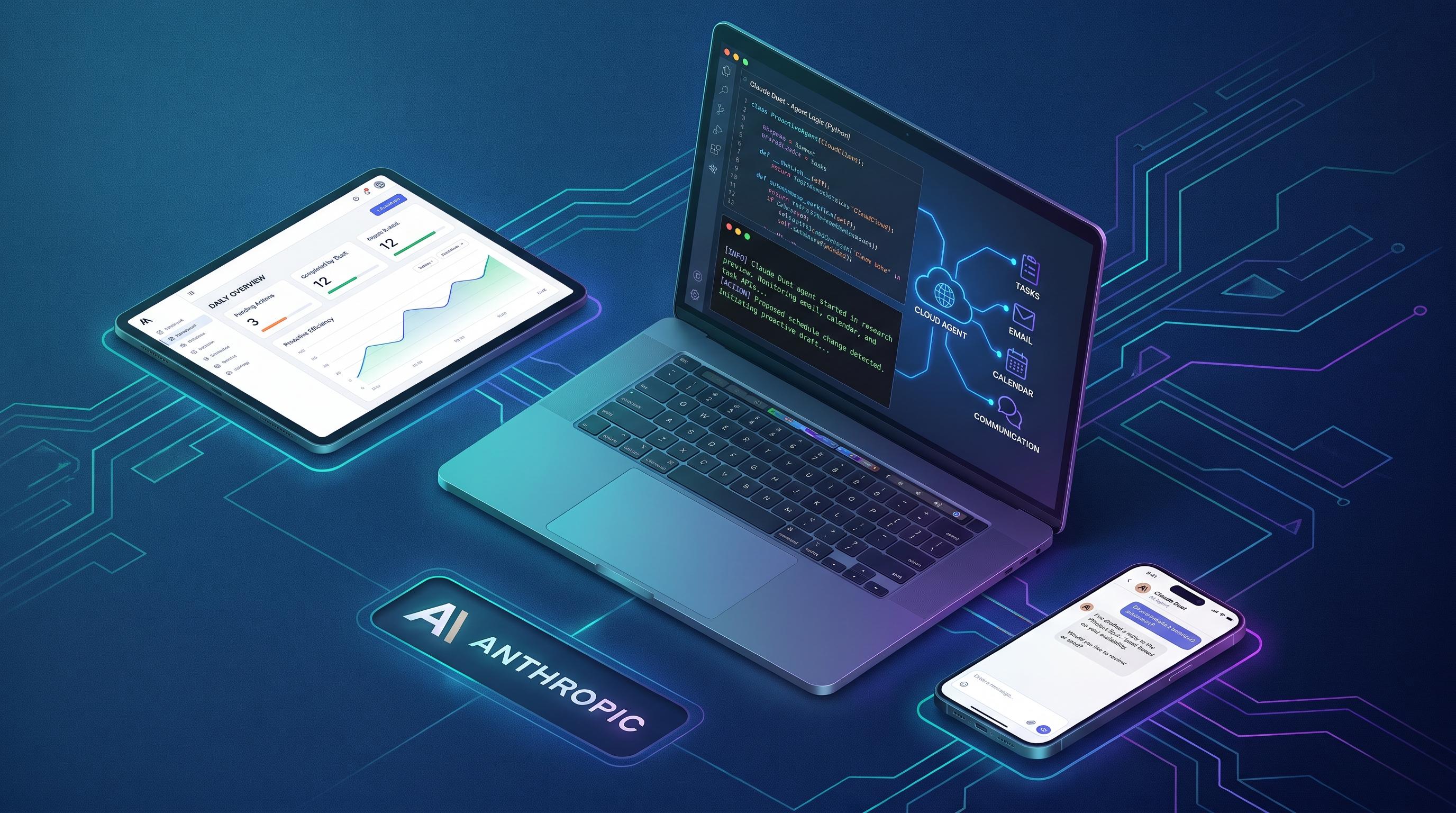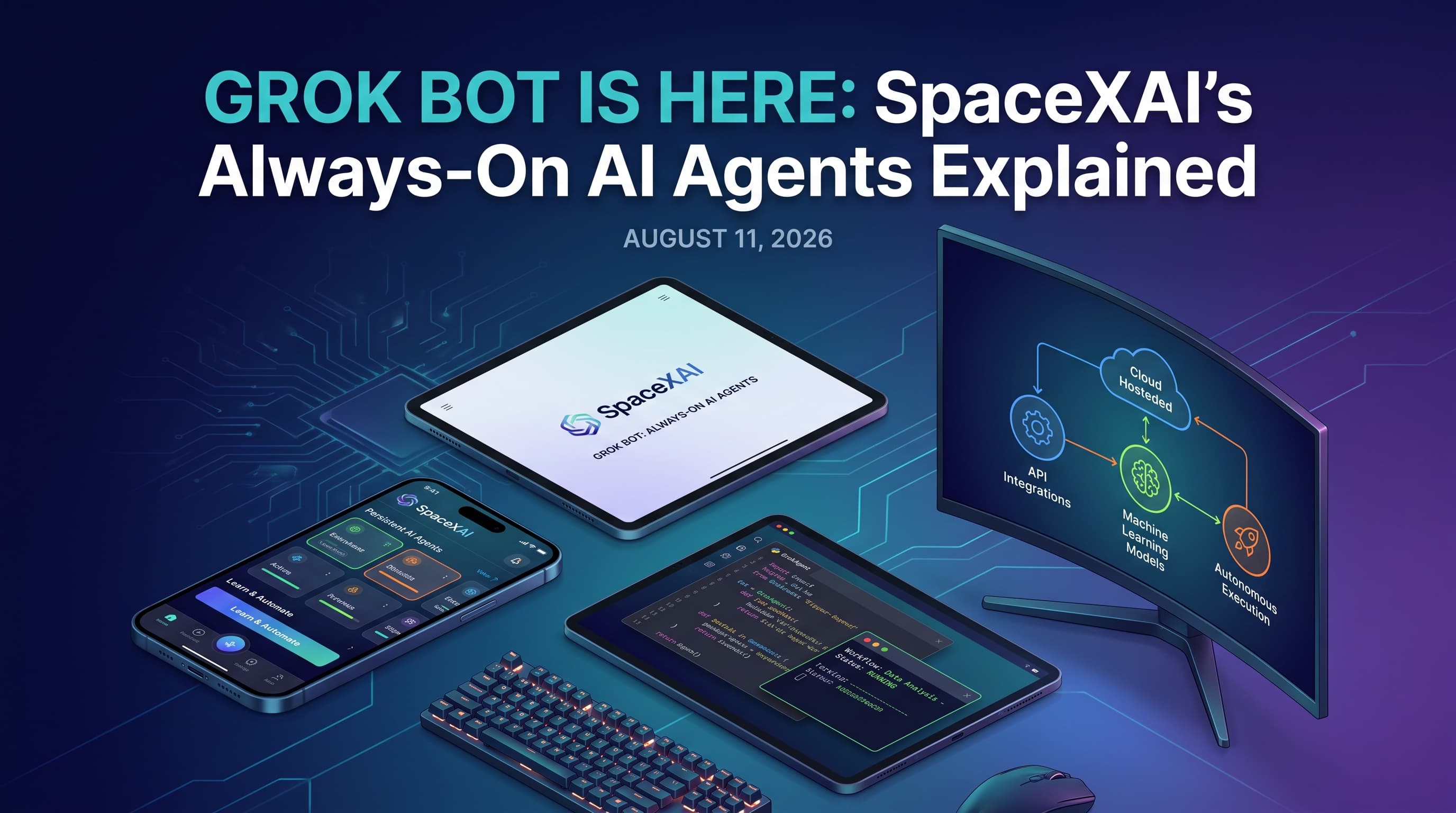
OpenAI just redefined what an AI assistant can be. At its annual DevDay developer conference in San Francisco on September 29, 2026, the company unveiled Dots — a new category of always-on AI agents designed to handle ongoing responsibilities autonomously, around the clock. If you've ever wished ChatGPT could just keep going after you close the tab, Dots is the answer.
What Are Dots?
Dots are persistent AI agents powered by OpenAI's latest GPT-6 Astra model. Unlike a standard ChatGPT conversation — which waits passively for your next message — a Dot is assigned a responsibility and runs with it, continuously, in the background. Think of it less like a chatbot and more like a tireless digital employee.
Each Dot runs on its own private, secure cloud computer and browser managed by OpenAI, meaning it can continue executing tasks even when your local device is powered off. According to Mashable, this cloud-native architecture is what separates Dots from every AI assistant that came before it.
How Dots Differ from a Normal ChatGPT Chat
The distinction is fundamental. A standard ChatGPT session is reactive — it responds when you prompt it, then sits idle. Dots flip that model entirely.
Always-on execution: Dots work 24/7 without requiring you to be present, logged in, or even online on your device.
Proactive communication: When a Dot hits a decision point that requires human judgment, it reaches out to you — not the other way around.
Ongoing responsibilities: Rather than answering a one-off question, a Dot owns a task or workflow over time, such as monitoring a project, managing a calendar, or processing incoming data.
Dedicated cloud environment: Each Dot operates in its own isolated cloud instance, keeping its work separate, secure, and persistent across sessions.
As The Agentic Stack noted, this positions Dots as a direct response to the growing demand for AI that doesn't just assist — it acts.
App Integrations and What Dots Can Actually Do
A Dot without connections is limited. OpenAI addressed this by giving Dots access to over 4,000 applications through its plugin ecosystem, according to Forbes. Out of the box, Dots can work across platforms including Slack, Microsoft Teams, and Google accounts, with text messaging support planned for a future update.
Practical Use Cases
The range of what a Dot can handle is broad, and that's by design. OpenAI is positioning Dots as flexible agents that adapt to the user's workflow rather than forcing users to adapt to the tool.
Inbox and calendar management: A Dot can monitor your email, draft responses, schedule meetings, and flag urgent items — without you lifting a finger.
Project tracking: Assign a Dot to watch a Slack channel or Teams workspace and surface blockers, summarize threads, or escalate issues proactively.
Research and monitoring: Set a Dot to track a topic, competitor, or data source and deliver digests on a schedule you define.
Cross-platform automation: With 4,000+ integrations, Dots can chain actions across multiple apps — pulling data from one service and pushing updates to another.
Pro Tip: Start with a single, well-defined responsibility for your first Dot. Agentic tools perform best when their scope is clear — broad or ambiguous instructions increase the chance of unexpected behavior requiring human correction.
Who Can Use Dots — and Who Has to Wait
Dots are rolling out exclusively to ChatGPT Pro and Business Premium subscribers, making this a paid feature from day one. If you're on a free or standard Plus plan, Dots are not yet available to you.
It's also worth noting the competitive context: Meta launched its own AI agent, Muse, as a free offering. OpenAI is betting that the depth, security, and integration breadth of Dots justifies the premium price point, as reported by Platformer News.
Regional Availability
There's a significant caveat for users in certain regions. The initial rollout of Dots excludes users in the European Economic Area (EEA), Switzerland, and the United Kingdom, where the feature is delayed due to regulatory considerations, according to the OpenAI Developer Forum. No specific timeline for those regions has been announced.
Important: If you're based in the EU, Switzerland, or the UK, Dots are not yet available to you regardless of your subscription tier. Monitor OpenAI's official announcements for regional rollout updates.
What Developers Should Know
For developers, Dots represent a meaningful shift in how AI capabilities can be embedded into products and workflows. The plugin ecosystem — already at 4,000+ integrations — is the primary surface for extending what a Dot can do, and OpenAI is expected to expand its developer tooling around agentic workflows in the months following DevDay.
OpenAI also announced ChatGPT Space alongside Dots — a shared workspace designed for teams to collaborate with ChatGPT, Dots, and other AI tools in a unified environment, as covered by Futurepedia. For development teams, this could become a meaningful alternative to stitching together separate AI tools across different platforms.
Plugin integrations: Build or leverage existing plugins to extend Dot capabilities into your own products and internal tools.
ChatGPT Space: Explore the new shared workspace for team-level AI collaboration — a potential hub for engineering and product workflows.
Agentic design patterns: Dots reward clear task scoping and well-defined escalation triggers — invest time in prompt and workflow architecture before deploying at scale.
Compliance awareness: The EEA/UK exclusion signals that regulatory scrutiny of autonomous agents is real. Factor compliance requirements into any enterprise deployment plan.
Key Takeaways
Dots are always-on AI agents: Announced at DevDay on September 29, 2026, they run 24/7 on OpenAI's secure cloud infrastructure, independent of your local device.
Powered by GPT-6 Astra: Dots use OpenAI's latest model and operate in private cloud environments, making them fundamentally different from a standard ChatGPT session.
4,000+ app integrations: Dots connect to Slack, Teams, Google, and thousands of other platforms through OpenAI's plugin ecosystem.
Pro and Business Premium only: Dots are a paid feature, currently unavailable on free or Plus plans, and not yet accessible in the EEA, Switzerland, or the UK.
ChatGPT Space is the team layer: OpenAI's new shared workspace pairs with Dots to give teams a collaborative AI environment — worth evaluating alongside Dots for any organization.