Anthropic just raised the stakes for the AI agent industry. With the formal announcement of its Claude agent platform — including native tool use, memory, multi-agent orchestration, and a dedicated API surface — the company is making a direct play for the enterprise AI automation market. For startups and developers building agent-based products, the implications are significant and immediate.
What Anthropic Actually Announced
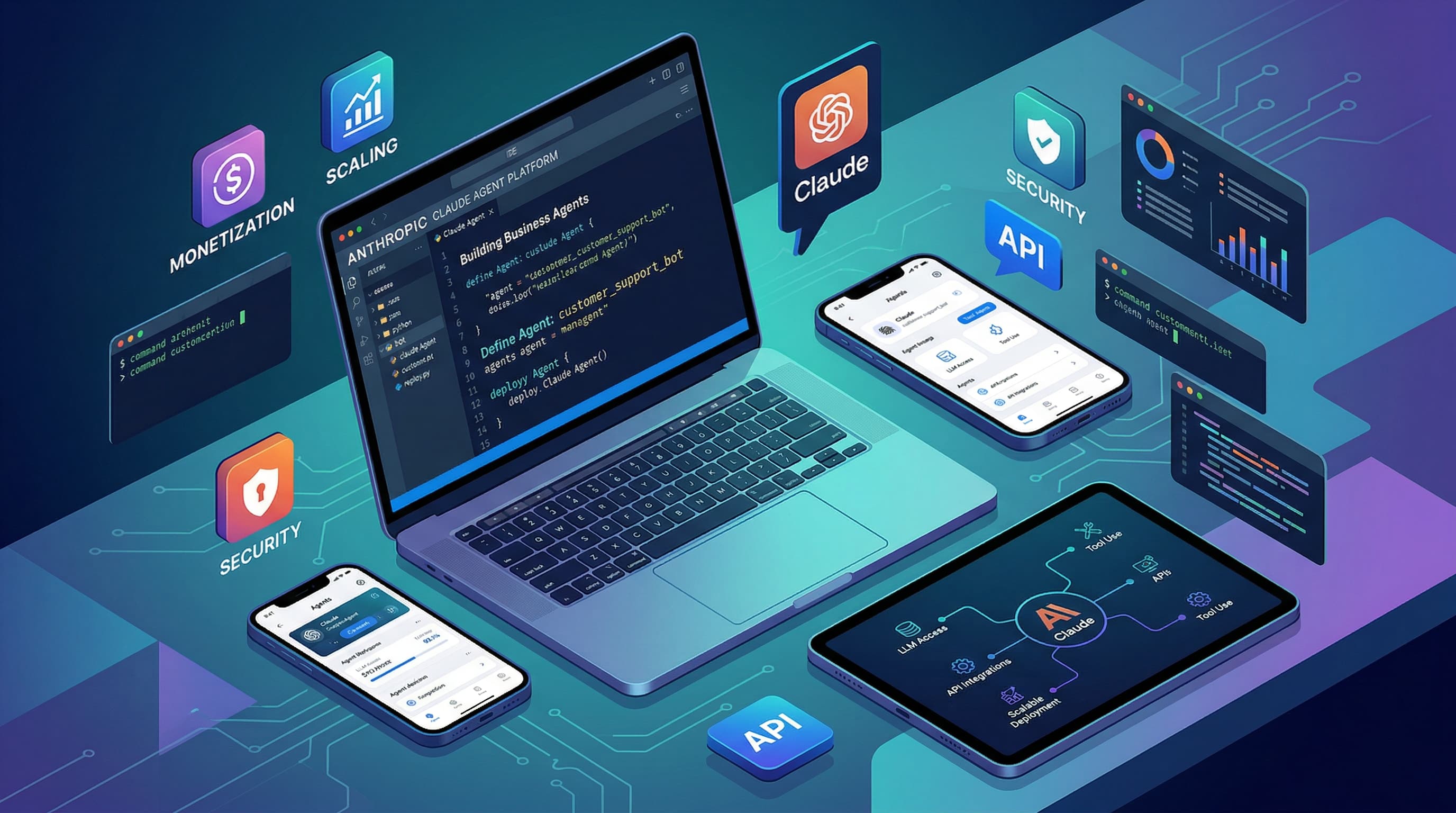
The Claude agent platform is not a single product — it is a suite of capabilities designed to let Claude operate as a persistent, goal-directed system rather than a stateless chatbot. At its core, the announcement centers on three pillars: expanded tool use, multi-agent coordination, and a more robust memory architecture.
Anthropic also introduced tighter integrations with enterprise infrastructure, positioning Claude as a foundational layer for complex, long-running workflows rather than a one-shot query engine. This is a meaningful architectural shift, not just a feature update.
Key Capabilities in the Platform
Native tool use: Claude can now call external APIs, execute code, search the web, and interact with file systems as first-class primitives — reducing the need for complex prompt engineering workarounds.
Multi-agent orchestration: Claude can act as both an orchestrator and a sub-agent, enabling hierarchical task delegation across networks of specialized models.
Persistent memory: The platform supports longer-horizon context management, allowing agents to retain state across sessions without developers building custom memory layers from scratch.
Computer use (expanded): Building on its earlier computer-use beta, Anthropic is extending Claude's ability to interact with GUIs and desktop environments, a critical capability for RPA-style automation.
Model Context Protocol (MCP): Anthropic's open standard for connecting AI models to external data sources is now more deeply embedded in the agent platform, giving developers a standardized integration layer.
Pro Tip: If you are building on top of another agent framework like LangChain or AutoGen, evaluate how Claude's native orchestration capabilities compare to your current stack — you may be able to eliminate a layer of abstraction entirely.
Why This Is a Threat and an Opportunity for AI Agent Businesses
The honest read here is that Anthropic is moving up the stack. By offering orchestration, memory, and tool use natively, they are encroaching on territory that dozens of well-funded startups have built their entire value propositions around. Companies selling "agent infrastructure" on top of raw LLM APIs now face a more capable, better-funded incumbent doing the same thing.
But the opportunity side is equally real. A more capable Claude means the ceiling for what agent products can deliver rises dramatically. Businesses that were previously blocked by model reliability or context limitations can now revisit use cases they shelved.
Who Faces the Most Disruption
Generic agent framework startups: Companies whose primary value is wrapping LLMs with memory and tool-routing logic are now competing directly with Anthropic's native offering — a difficult position.
RPA vendors: The expanded computer-use capability puts Claude in direct competition with legacy robotic process automation tools, particularly for knowledge-work automation.
Middleware and integration layers: Startups that built proprietary context management or tool-calling middleware may find their differentiation eroded as these become platform defaults.
Who Stands to Benefit
Vertical SaaS builders: Companies building domain-specific agent products — in legal, healthcare, finance, or engineering — can now ship faster using Claude's native capabilities as infrastructure rather than building it themselves.
Enterprise automation consultancies: System integrators and consultancies that help large organizations deploy AI workflows have a more powerful and standardized toolset to work with.
Developers on MCP: Early adopters of the Model Context Protocol gain a strategic advantage as the ecosystem around it grows and enterprise buyers standardize on it.
The Competitive Landscape Just Got More Complicated
Anthropic's move does not happen in isolation. OpenAI has been building out its own agent capabilities through the Assistants API and GPT Actions. Google is pushing Gemini into agentic workflows via Vertex AI. The race to own the agent runtime layer is now a three-way competition between the largest AI labs — and that compression at the top has cascading effects for everyone building below them.
The critical question for founders is no longer "which LLM should I use?" but rather "which platform's agent primitives align best with my product's long-term architecture?" Switching costs are rising as these platforms mature.
Important: Vendor lock-in risk is real. As Anthropic, OpenAI, and Google each build proprietary agent runtimes, evaluate your abstraction strategy carefully. Building directly on any single platform's agent API without an abstraction layer could limit your flexibility as the market evolves.
What AI Agent Businesses Should Do Right Now
The announcement demands a strategic response, not just a technical evaluation. Businesses in the agent space need to audit their differentiation honestly and decide where they sit relative to what Anthropic is now offering natively.
Audit your moat: Identify which parts of your product are now replicable by Claude's native platform — and double down on the parts that are not, particularly domain expertise, proprietary data, and customer relationships.
Evaluate MCP adoption: If you have not already explored the Model Context Protocol, now is the time — it is emerging as a de facto standard and early ecosystem participation has compounding benefits.
Test multi-agent workflows: Run your most complex use cases through Claude's native orchestration and benchmark it honestly against your current stack for cost, latency, and reliability.
Revisit shelved use cases: If context length, tool reliability, or agent coherence previously blocked a product idea, re-evaluate it against the new capability set.
Watch enterprise pricing closely: Anthropic's enterprise tier pricing for agent workloads will be a defining factor in whether the platform is viable for high-volume production deployments.
Key Takeaways
Anthropic is moving up the stack: The Claude agent platform bundles orchestration, memory, and tool use natively — directly competing with infrastructure startups that built on top of raw LLM APIs.
Vertical builders benefit most: Domain-specific agent companies can now ship faster using Claude's primitives, while generic agent framework startups face the sharpest competitive pressure.
MCP is worth watching: The Model Context Protocol is positioning itself as a standard integration layer — early adoption could become a meaningful strategic advantage.
Lock-in risk is rising: As all major labs build proprietary agent runtimes, abstraction strategy and vendor diversification deserve serious architectural attention.
The window for differentiation is narrowing: Businesses that have not yet identified a defensible moat beyond model capabilities need to move quickly — platform commoditization is accelerating.