That's exactly what Google's latest experimental tool, Opal, promises to deliver. Launched just this week through Google Labs, Opal represents a significant leap forward in democratizing AI-powered app development.
What Is Google Opal?
Opal is a new experimental tool from Google Labs that lets you build and share powerful AI mini apps that chain together prompts, models, and tools — all using simple natural language and visual editing. Think of it as a bridge between having a brilliant idea and actually seeing it come to life as a working application, without writing a single line of code.
The tool joins the growing "vibe-coding" movement, where the barrier between concept and creation is dissolved through conversational AI. Instead of learning programming languages, users simply describe what they want their app to do in plain English.
How Opal Works: From Conversation to Creation
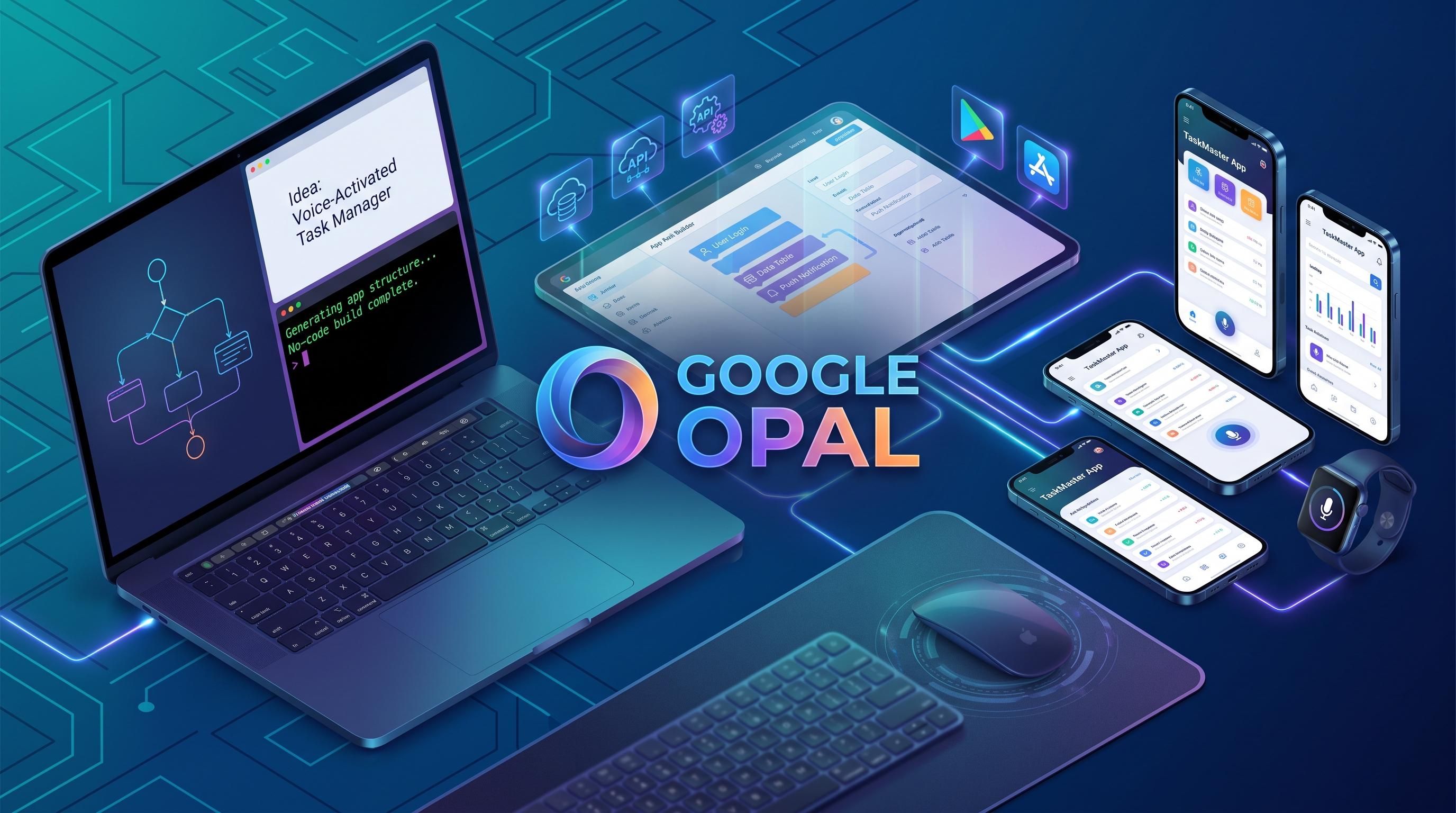
The magic of Opal lies in its intuitive workflow. Opal translates your instructions into a visual workflow, giving you fine-grained control without ever needing to see a line of code. Here's how the process unfolds:
1. Describe Your Vision: Start with a ChatGPT-like interface where you explain your app idea in natural language. Want a calculator that converts currencies? A checklist app for daily tasks? Simply describe it.
2. Watch It Build: Opal helps simplify and visualize these workflows, empowering you to build powerful, multi-step apps by chaining together prompts, AI model calls, and other tools. Just describe the logic, and Opal builds the visual workflow for you.
3. Fine-Tune With Ease: On clicking the steps, the user has the option of examining the prompts that propel them or altering the logic to alter app behavior. Other elements also have the possibility of being added manually using a drag-and-drop toolbar.
4. Share Instantly: Once your app is ready, you can share it as an app for others to use immediately, using their own Google account.
Who Can Benefit From Opal?
Opal isn't just for developers—it's designed for anyone with ideas. Opal introduces a new way to create with AI. It's about empowering creators, innovators, and doers to build the tools they imagine by transforming simple prompts into powerful mini apps.
Content Creators can build custom tools for their workflows, Business Professionals can prototype solutions for their teams, Educators can create interactive learning materials, and Entrepreneurs can quickly test app concepts without technical expertise.
What Makes Opal Different?
While Google already offers AI Studio for developers, Opal takes a more visual approach. The interface is clean, simplified, and oriented toward general users who may not have a technical background. This positions Opal alongside design-forward tools like Canva's Magic Studio and Figma's AI features, but with a focus on functional app creation rather than just design.
To help you get started, Opal features a demo gallery with starter templates. You can use these pre-built AI apps as they are, or remix them to fit your exact needs. This means you can jump right in, even if you're not sure where to start.
The Current Landscape and Competition
Google's entry into the no-code AI space comes at a crucial time. The company joins a long list of competitors, including Canva, Figma, and Replit, that are making tools to encourage non-technical people to create prototypes of apps without having to do any coding. Just weeks before Opal's launch, Amazon introduced Kiro, an AI-powered development environment, making this a rapidly evolving competitive landscape.
What You Can Build (And What You Can't)
Early testing reveals that Opal excels at building static front-end experiences like calculators, checklists, and portfolio templates, but falls short for apps requiring backend integration or real-time data handling. This means Opal is perfect for:
Interactive calculators and converters
Task management tools
Simple games and quizzes
Marketing landing pages
Educational content
Personal portfolios
However, if you need complex database integration or real-time data processing, you'll likely need to look elsewhere—for now.
Getting Started With Opal
Opal is brand new and experimental. We're launching today in a US-only public beta because we believe the best way to build a new product is with our community, right from the start. You can access Opal through Google Labs, where it joins over two dozen other experimental AI products.
The platform comes with pre-built applications spanning consumer use cases like video game design and business applications for generating marketing materials and conducting research.
The Future of No-Code Development
Opal represents more than just another no-code tool—it's a glimpse into a future where the gap between imagination and implementation continues to shrink. As AI models become more accessible, tools like Opal mark a shift in how people interact with technology, one where ideas can become reality through conversation rather than code.
Industry experts predict that AI coding agents will handle at least 20% of software engineering work by 2026. With Opal, Google is betting that its user-friendly, visual approach will be key to winning this new frontier of software creation.
Getting Your Hands on Opal
Ready to turn your app ideas into reality? Opal is currently available to users in the United States through Google Labs' public beta program. Simply visit opal.withgoogle.com to get started, and prepare to be amazed at how quickly you can go from concept to functional app.
Whether you're a seasoned creator or someone who's never built an app before, Opal offers an exciting new way to bring your digital ideas to life. The future of app development is here, and it speaks your language—literally.